Hyperscaler debt issuance is surging, bond demand is weakening, and matched AI bonds are trading 15–22bp wider. Capital may be becoming AI's next bottleneck.
Market NotesORCLMSFTGOOGLMETAAMZNNVDACRWV
Market NotesAI DebtAI CapExHyperscaler debtBig Tech AI spendingOracleORCLMicrosoftMSFTAlphabetGOOGLMetaMETAAmazonAMZNNvidiaNVDACoreWeaveAI credit spreadsTreasury yields10-year TreasuryAugust CPI 2026Fed hike oddsAI financingdata center financingcost of capitalprivate credithyperscaler bond issuancematched-bond spreadnew-issue concessionAI infrastructure bottleneck
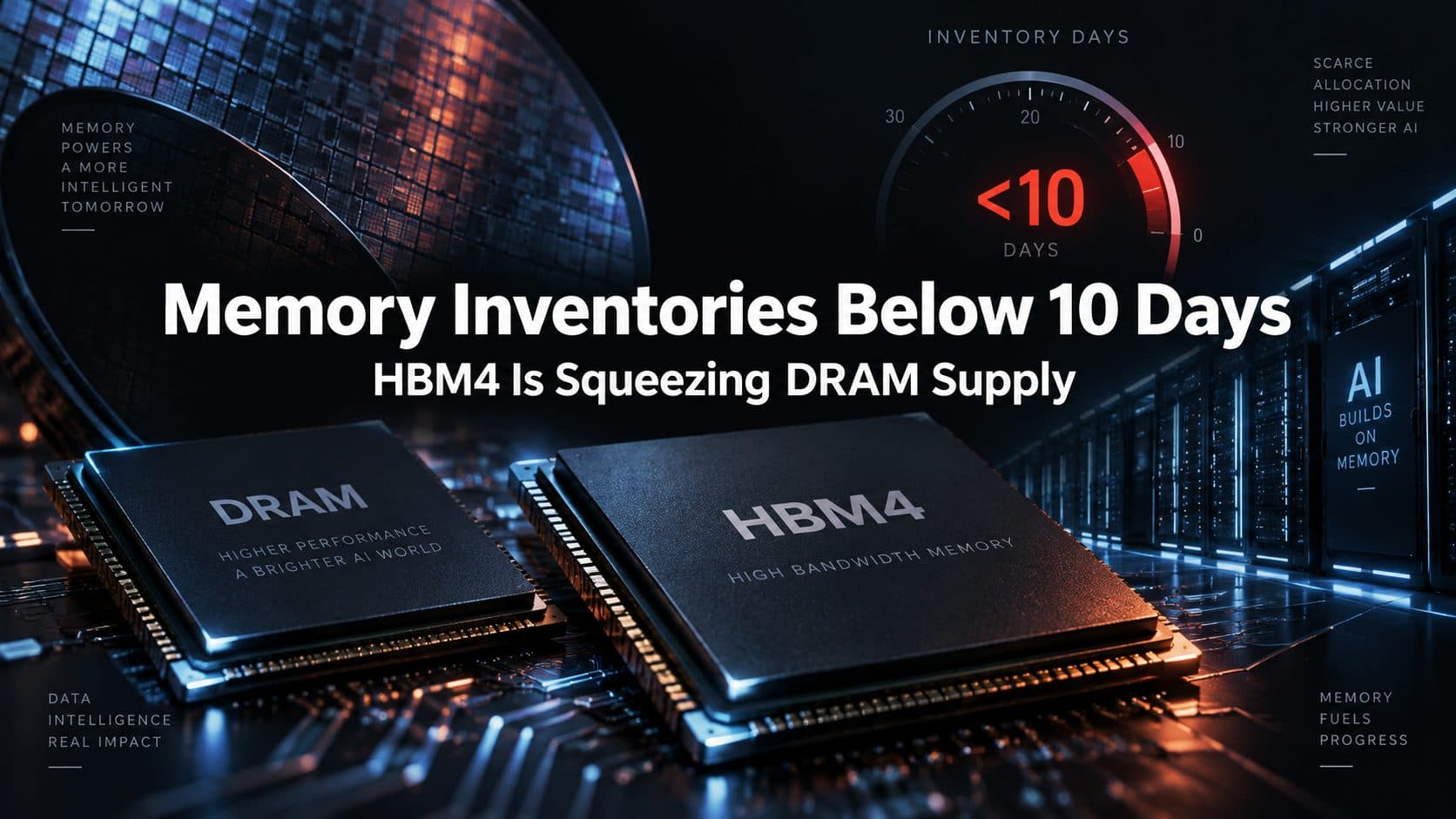
Memory inventories below 10 days matter because the industry is running out of the inventory buffer that normally absorbs unexpected changes in demand. HBM4, long-term customer agreements and uncommitted bit supply now matter more than another HBM demand forecast.
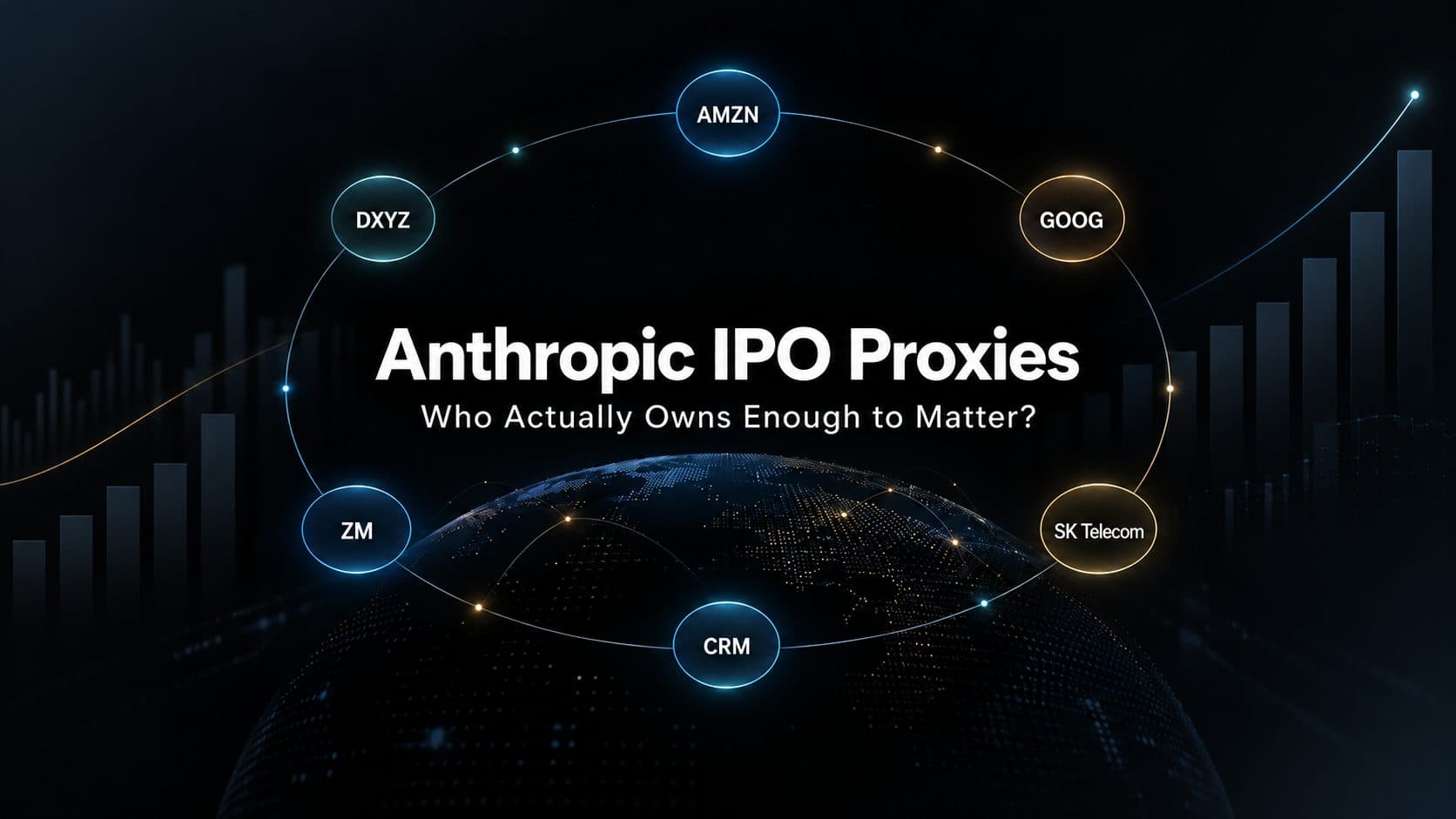
The best Anthropic IPO proxy is not the company that owns the most Anthropic. It is the public company whose market value is most concentrated in its Anthropic position — which currently puts SK Telecom, DXYZ and Zoom ahead of Amazon, Alphabet and Salesforce.
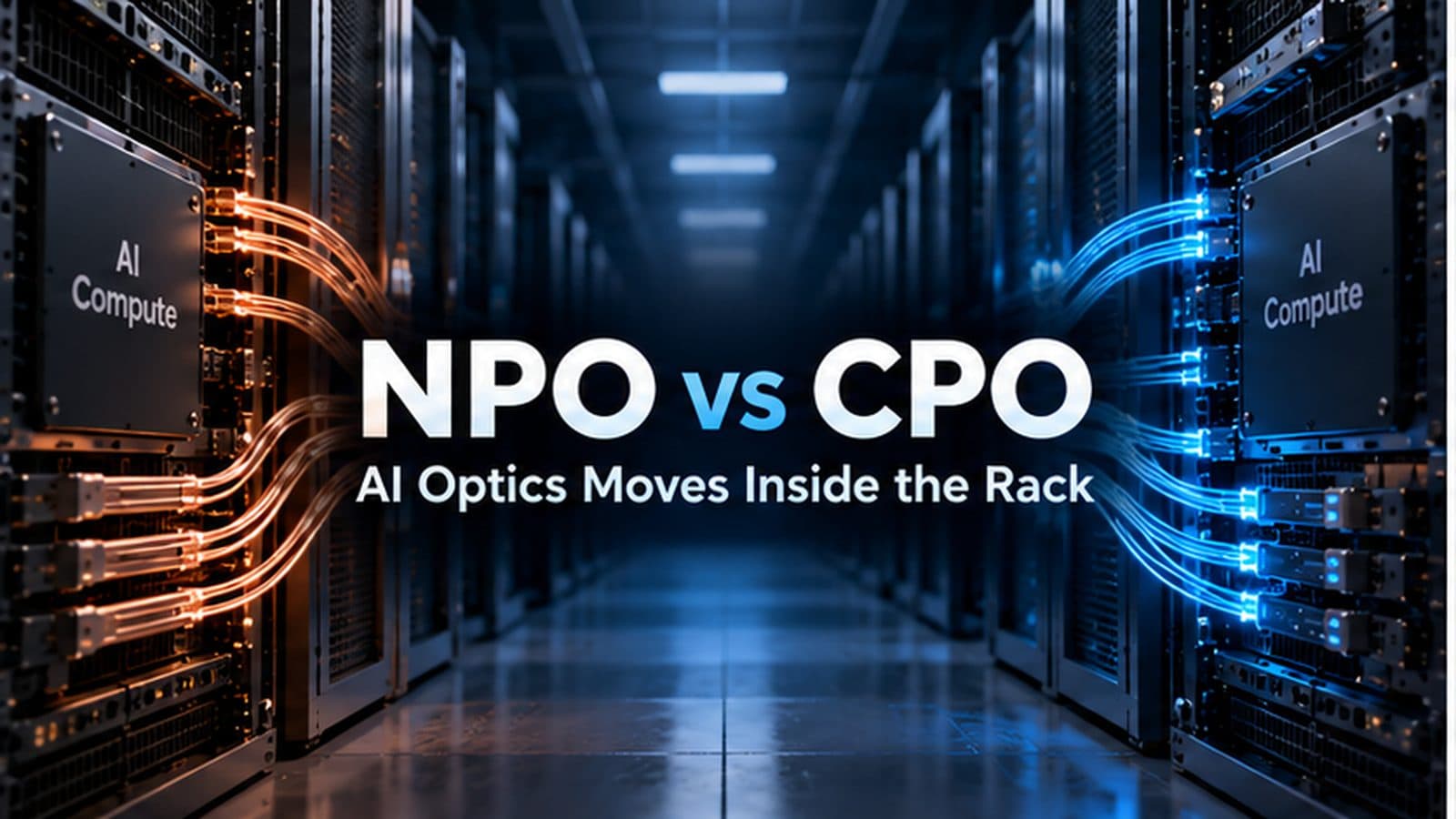
AI data centers are pushing optical connectivity away from the front panel and closer to GPUs and switch ASICs. NPO, CPO, and 1.6T pluggable optics may coexist for years, but the shift is already redistributing value across silicon photonics, lasers, optical engines, testing, and the broader optical module supply chain.
Industry TrendsCOHRLITETSEMAEHRMTSIAAOI
Industry TrendsNPOCPOAI OpticsOptical InterconnectsAI Scale-UpSilicon Photonics1.6T Optical TransceiversOptical Module Supply ChainCoherentLumentumMACOMSoitecTower SemiconductorAehr Test SystemsAAOIAI Data CentersPhotonics-SOI
Gold is still a real-rate trade in the short term, but rising U.S. debt and fiscal pressure are changing its medium-term relationship with Treasury yields.
Market Notes
Market NotesGold Outlook 2026gold price outlookTreasury yieldsU.S. debtreal yieldsgold and interest rates
Broadcom’s custom accelerators are moving into gigawatt-scale deployments. The bigger investment question is what happens to the AI infrastructure value pool when compute is no longer built around GPUs alone.
Industry TrendsAVGONVDAMRVLGOOGLMETA
Industry TrendsBroadcomAVGOCustom AI ChipsCustom AcceleratorsAI ASICGoogle TPUOpenAIMeta MTIAAnthropicNvidiaNVDAHBMHBM3EHBM4AI NetworkingOptical InterconnectEMLCW LaserInPCPOMarvellMRVLAI InfrastructureAI Factory
AI server orders, cloud utilization, and HBM contracts all point to real demand. The harder question for 2027 is whether high prices and new qualified supply begin to change the cycle.
Memory stocks have bounced from the selloff and settled into a range. The next move may depend less on another headline that AI demand is strong, and more on whether the market can push its earnings assumptions several years further out.
Industry TrendsMUSNDK005930.KSSKHYNVDA
Industry TrendsHBMHBM4HBM4EDRAMNANDAI MemoryMemory StocksSK HynixSamsung ElectronicsMicron TechnologySandiskCXMTHBM ShortageEnterprise SSD
Japan’s 10-year yield hit 3% for the first time since 1996 as USD/JPY returned near 160. The old U.S.-Japan yield-spread anchor has weakened; Japan’s own curve, fiscal risk, and the BOJ-Fed rate-hike setup are now what matter for September.
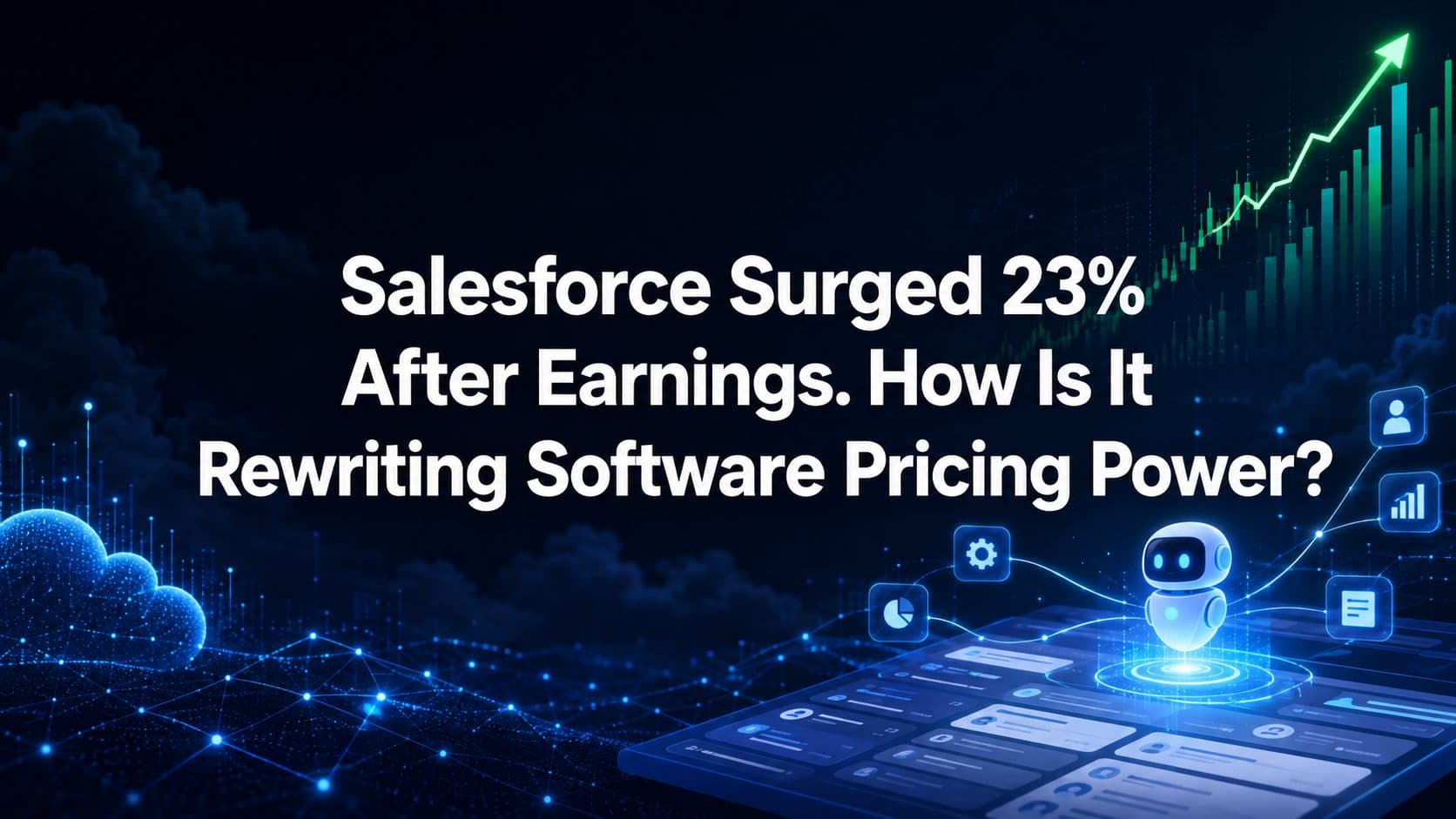
Salesforce's 23% post-earnings rally was less about a revenue breakout than about the market lowering the probability that AI agents will permanently destroy software terminal value. Agentforce passed a real-consumption test; the full-renewal test is just beginning.
Microsoft’s Azure growth showed that AI infrastructure spending is translating into cloud revenue, while hyperscaler CapEx continues to support memory, networking, optical connectivity, and GPU cloud capacity.
NVIDIA's support for open-weight AI is best understood as an infrastructure strategy. If models become easier to access, the scarce profit pools may move toward compute, data and applications.
Industry TrendsNVDAMSFTMETAAMZNGOOGLBABA
Industry TrendsNVIDIA open AI modelsOpen weight AI modelsAI business modelAI InfrastructureOpenAIMeta LlamaCloud Computing
CXMT has proven it can manufacture mainstream DRAM at scale and enter China’s server supply chain. What remains unproven is whether it can match Samsung, Micron and SK hynix on yield, cost per bit and profitability through a full memory cycle.
Industry Trends688825.SS005930.KSMUSKHYSNDKWDC
Industry TrendsCXMTDRAMDDR5LPDDRHBMChina SemiconductorsSamsung ElectronicsMicron TechnologySK HynixSanDiskWestern Digital
Agentic AI is expanding infrastructure demand across GPUs, CPUs and memory. Intel’s rebound is real, but its durability will be tested when premium product mix and supply scarcity begin to fade.
AI infrastructure spending is moving beyond GPUs and HBM into substrates, PCB materials, high-end circuit boards and passive components. The key investment question is which parts of the supply chain can retain the most profit.
Market NotesTTMIAMD
Market NotesEnglish Investment ResearchAI Server PCB ShortageAI Server Supply ChainPCB Profit PoolABF Substrate ShortageCCL ShortageTTM Technologies AIAI Server Passive ComponentsAI Infrastructure Investment
Public research has accelerated the discovery of AXT’s strategic position in indium phosphide. The investment outcome now depends on whether operating economics can catch up with expectations already embedded in the stock.
Business ModelsAXTI
Business ModelsAXTAXTIIndium PhosphideAI Optical InfrastructureSemiconductor SubstratesAI Infrastructure
The market is already pricing a future in co-packaged optics, external laser sources and InP manufacturing. The harder question is whether qualification, capacity, yield and customer orders can turn that future into per-share cash flow.
Business ModelsSIVESIVEF
Business ModelsSivers SemiconductorsSIVESIVEFAI PhotonicsCo-Packaged OpticsSilicon PhotonicsSemiconductorsAI Infrastructure
Stablecoins look like digital dollars, but the business behind them is driven by reserve balances, Treasury yields, and distribution economics. Here is how USDC works and why OUSD could change who captures the profits.
BeginnersCRCL
BeginnersStablecoinsOpen USDOUSDUSDCCircle Internet GroupStripeBridgeStablecoin Business ModelReserve Income
HBM supplies extreme bandwidth to AI accelerators, while DDR5 provides larger pools of system memory. Understanding the difference is essential for analyzing AI infrastructure and memory stocks.
BeginnersSKHY005930.KSMUNVDA
BeginnersHBM vs DDR5HBM vs DDR5 for AIHigh-Bandwidth MemoryDDR5DRAMAI MemoryHBM ShortageHBM ManufacturersSK HynixSamsung ElectronicsMicron TechnologyNvidia
ChangXin Memory Technologies is already the world’s fourth-largest DRAM producer. Its Shanghai IPO could accelerate competition in DDR and mobile memory, although the company remains well behind the leaders in HBM.
Open USD is not simply another dollar stablecoin. Its real proposition is to rewrite who captures the interest generated by stablecoin reserves—and that may put more pressure on Circle than on the traditional payments industry.
Business ModelsCRCL
Business ModelsOpen USDOUSD StablecoinOpen StandardStablecoin Business ModelUSDC Reserve IncomeCircle Business ModelStripe StablecoinStablecoin Reserve YieldStablecoin Distribution Economics
June CPI reduced near-term Fed hike fears, but Treasury financing, oil prices, AI capital spending, the dollar and the midterm elections still shape the second-half market outlook.
Qualcomm is targeting $40 billion in non-handset revenue by fiscal 2029, including more than $15 billion from data centers. The market still values the company primarily through its smartphone exposure. The next earnings report will test whether the transition is beginning to appear in revenue, margins, and guidance.
AI demand is still growing, but as GPUs, long-term compute contracts, project finance, and customer credit become more tightly connected, the real risk may be hiding in how the expansion is funded.
AI demand is real, but the infrastructure behind it is increasingly financed through debt, long-term contracts, project finance, and GPU-backed lending.
Bank of America’s July 2026 Flow Show points to Japanese bank stocks as a possible early warning for global markets. The signal matters only when bond yields, capital flows, the yen, credit and U.S. market breadth begin deteriorating together.
SK Hynix’s Nasdaq debut ends Micron’s trading scarcity. The harder question is which company can preserve pricing power when new memory supply arrives in 2028.
Industry TrendsSKHYMU
Industry TrendsSK HynixMicronHBMMemorySemiconductorsAI InfrastructureNasdaqCHIPS ActSupply ChainMemory Cycle
SK Hynix is one of the world’s largest memory manufacturers and the leading supplier of HBM. Here is how its Nasdaq ADR works and how it differs from Micron.
Meta Compute is not an AI capex retreat. Meta is still expanding data center capacity while turning AI compute into a flexible asset across ads, models, APIs, and external leasing.
Business ModelsMETACRWVNBISORCLGOOGLAMZNMSFTNVDA
Business ModelsMetaAI InfrastructureAI CapExData CentersNeocloudCoreWeaveNebiusOracleSpaceXxAIAnthropicDigital Advertising
AI showed how infrastructure winners can dominate an era. Now the space economy is being tested through SpaceX, Rocket Lab, Iridium, and the five layers of long-term infrastructure investing.
Business ModelsRKLBIRDMNVDA
Business ModelsSpace EconomySpaceXRocket LabIridiumInfrastructure InvestingBusiness ModelAI InfrastructureNvidiaSatellite CommunicationsCapital Validation
AI infrastructure spending is still expanding, but the semiconductor equity trade is becoming more fragile. The next phase depends on CapEx, supply bottlenecks, usage, pricing, and earnings revisions.
Industry TrendsNVDATSMMUAVGOAMDMSFTAMZNGOOGLMETA
Industry TrendsAI InfrastructureAI CapexSemiconductorsData CenterCloud ComputingNVIDIATSMCHBMAdvanced PackagingMicrosoftAmazonAlphabetOpenRouterMorgan Stanley
Nvidia is showing that the unit cost of AI production is falling. Investors are asking whether cheaper tokens can turn into visible profits and free cash flow fast enough.
The U.S. is rebuilding dollar credibility through strong-dollar policy, Treasury demand, Fed uncertainty, stablecoins, AI infrastructure, and gold reserves.
Macro & Policy
Macro & PolicyScott BessentKevin WarshFederal ReserveStrong DollarTreasury MarketGoldStablecoinsAI InfrastructureEconomic StatecraftGlobal Capital FlowsU.S. Dollar
Micron’s AI memory boom is no longer just about one strong quarter. The real question is whether Strategic Customer Agreements, HBM demand, and record capex can turn a memory cycle into a more predictable AI infrastructure business.
Micron’s earnings are not a low-expectation setup. The market already knows HBM demand is strong. The real question is whether Micron’s profits reflect a traditional memory upcycle or a structural AI-driven shift in memory supply.